Address
Blyth, Northumberland
U.K. NE24 2QW
Telephone
+44(0)1670 336766
Opening Hours
Monday to Friday: 08:00 - 17:30

Address
Blyth, Northumberland
U.K. NE24 2QW
Telephone
+44(0)1670 336766
Opening Hours
Monday to Friday: 08:00 - 17:30
Our Story
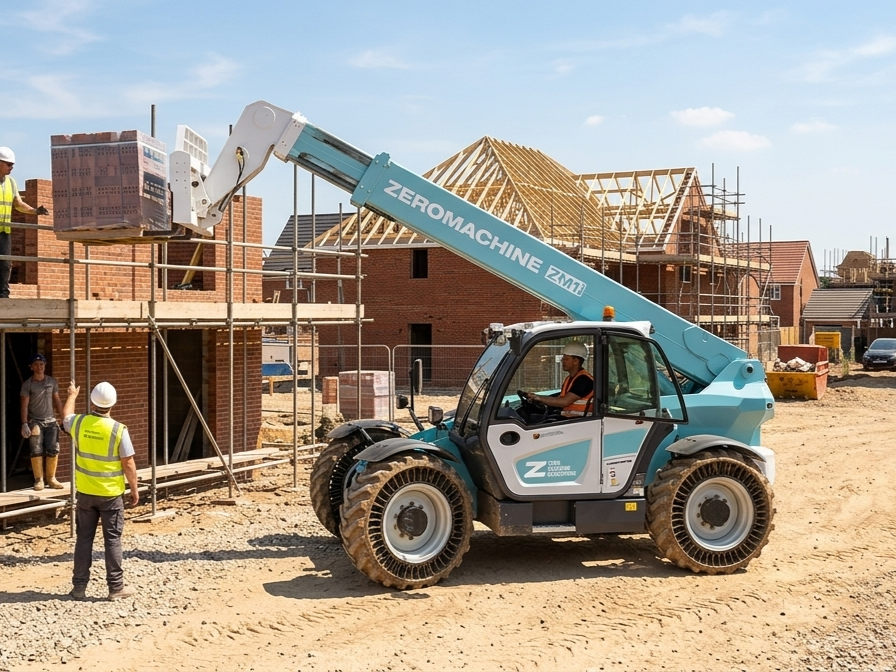
Zeromachine is a British engineering company developing a zero-emission hydrogen fuel-cell hybrid electric telehandler for construction and agricultural use, built around lifecycle-first design, full electrification and lower whole-life cost than diesel. We’re based in Blyth, Northumberland, and led by founder and CEO Gavin Duffy, an automotive electrical and electronics design engineer with extensive hands-on experience of how real vehicles and machines are designed, built and kept working on site.
Founded in November 2024, Zeromachine grew out of a four-and-a-half-year effort to rethink sustainable construction equipment. The long-term vision is the telehandler programme, while the near-term commercial route to market is the High Voltage Power Distribution Unit (HVPDU), a product intended to create early revenue and support the wider programme in the right order.
We’re working to bridge the gap between cutting-edge hydrogen fuel cell innovation and the rugged demands of real-world construction sites and farms, with a common-sense, lifecycle-first approach to design.
Recognition
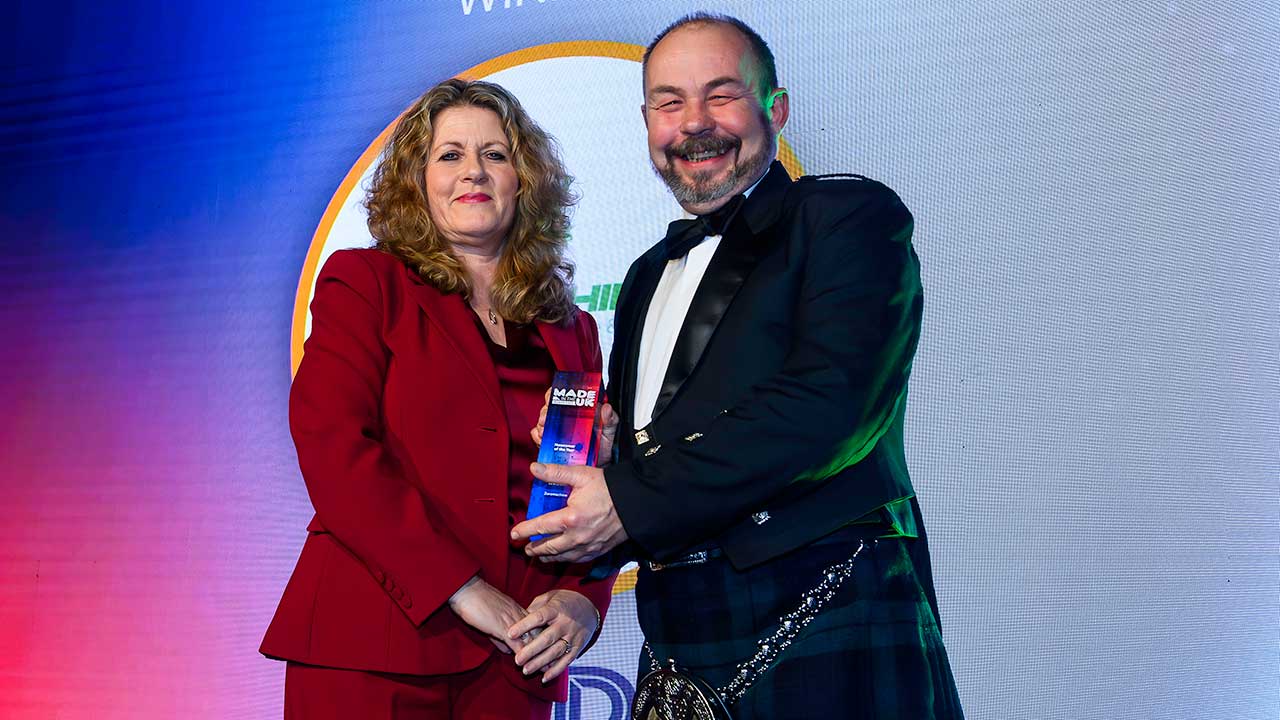
In March 2026, Zeromachine was named Newcomer of the Year at Insider’s Made in the North East Awards 2026. As a regional winner, the business automatically became a finalist in the national Made in the UK Awards 2026, which take place in November 2026.
That came after Zeromachine’s earlier selection by the Royal Academy of Engineering for the 2025 Regional Talent Engines programme. Regional Talent Engines sits within the Academy’s Enterprise Hub, which the Financial Times, Statista and Sifted ranked number 1 startup hub in the UK in 2026. Together, those milestones helped validate Zeromachine’s direction at an early stage.

Most products today are designed around the assembly line and the first sale, with planned or at least accepted obsolescence built in. A familiar example is the modern smart TV: over a few years it gets slower to start up and slower to load apps. The display panel and core hardware might have a physical life of ten years or more, but software support, apps and connectivity often become obsolete much sooner. That is partly because support is dropped after a relatively short window, and partly because the electronics are often specified to be only just good enough for the present moment, with no real headroom for what comes next. As services update, the product grinds to a halt long before the hardware is physically worn out. It is difficult to argue that this is a sustainable way to design products.
Lifecycle-first design means that servicing, repair, upgrades and end-of-life are core design requirements, not afterthoughts. The primary aim is to design machines that can be kept economically productive for as long as the core structure and components still have useful life in them.
That means making machines easy to repair and service from the outset, using components and layouts that can be diagnosed and replaced quickly, and avoiding sealed-for-life assemblies wherever practical. The aim is to reduce whole-life cost and downtime, not just tailpipe emissions. Sustainable design means accounting for the whole lifecycle — from materials and manufacturing to upgrades and end-of-life — and backing that up in how the product is actually engineered, rather than relying on built-in obsolescence to drive the next sale.
We’re also moving away from traditional hard-to-manage hydraulic systems wherever it makes sense, and towards more efficient, controllable electric actuation. By using electric linear actuators instead of conventional hydraulic cylinders in key areas, we can reduce energy losses, remove the need for large volumes of hydraulic oil and simplify maintenance routines.
End-of-life is part of the brief from day one. We’re thinking about how major sub-assemblies can be remanufactured, upgraded or recycled, and how materials and fasteners can support that, rather than locking value into a machine that has to be scrapped. Take the steelwork: a well-designed chassis and boom can have thirty years of useful life, so instead of throwing that away we want to bring machines back to the factory, disassemble them and give them a completely new lease of life with upgraded systems built onto the same core structure.
Zeromachine is led by founder and CEO Gavin Duffy, supported by a small but growing team of engineers, advisors and industry partners. Gavin is a Scottish automotive electrical design engineer with more than 35 years of experience, the last 15 focused on low- and zero-emission technologies in passenger-carrying vehicles, off-highway machinery and non-road mobile equipment.
That experience sits behind Zeromachine’s R&D and the long-term ambition to establish a world-class engineering and manufacturing presence in Blyth. Gavin remains a petrolhead at heart, with early roots in stage rallying and off-road motorsport as both a competitor and an official. That mix of motorsport pragmatism and clean-technology R&D underpins Zeromachine’s focus on machines that are not only cleaner, but also genuinely rewarding to operate and straightforward to keep running.