Address
Blyth, Northumberland
U.K. NE24 2QW
Telephone
+44(0)1670 336766
Opening Hours
Monday to Friday: 08:00 - 17:30

Address
Blyth, Northumberland
U.K. NE24 2QW
Telephone
+44(0)1670 336766
Opening Hours
Monday to Friday: 08:00 - 17:30
Victorian railway engineer Sir George Barclay Bruce sketched today’s renewable‑plus‑storage vision in the 1880s. This post links his “forces of nature” idea to modern net‑zero engineering.
The future of nature has been shaped as much by practical industrial decisions as by idealism, and some of those ideas arrived earlier than most people realise. If you think grid-scale renewables plus storage is a 21st‑century idea, meet Sir George Barclay Bruce – a Geordie railway engineer who sketched the concept in the 1880s. Long before lithium cells, battery gigafactories and net‑zero targets, Bruce was already talking about capturing “the unemployed forces of nature such as the winds and streams and tides” and turning them into stored electrical energy. This full inspirational quote from his 1887 Institution of Civil Engineers presidential address is what you see on the right hand side bar as you read this.
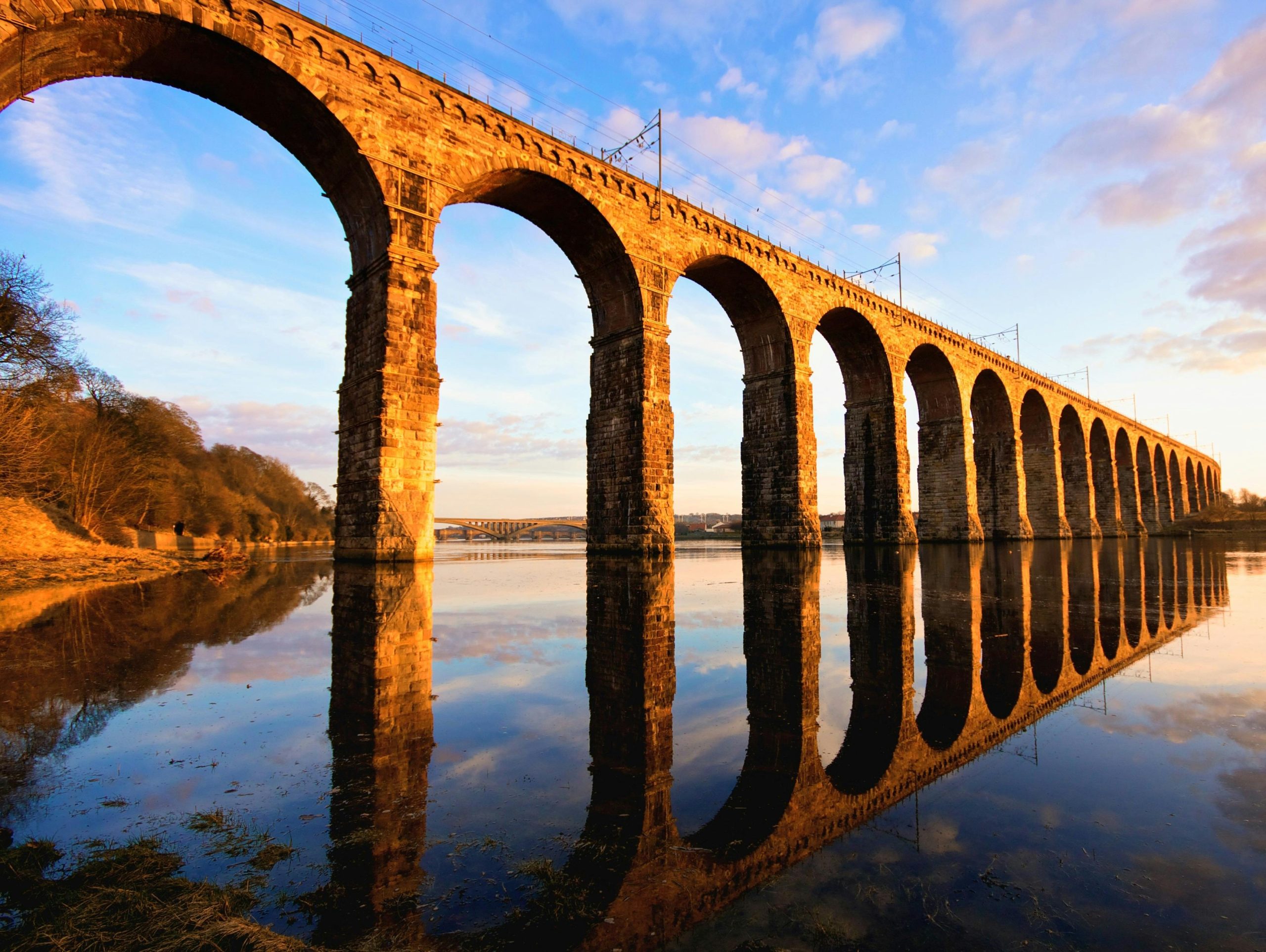
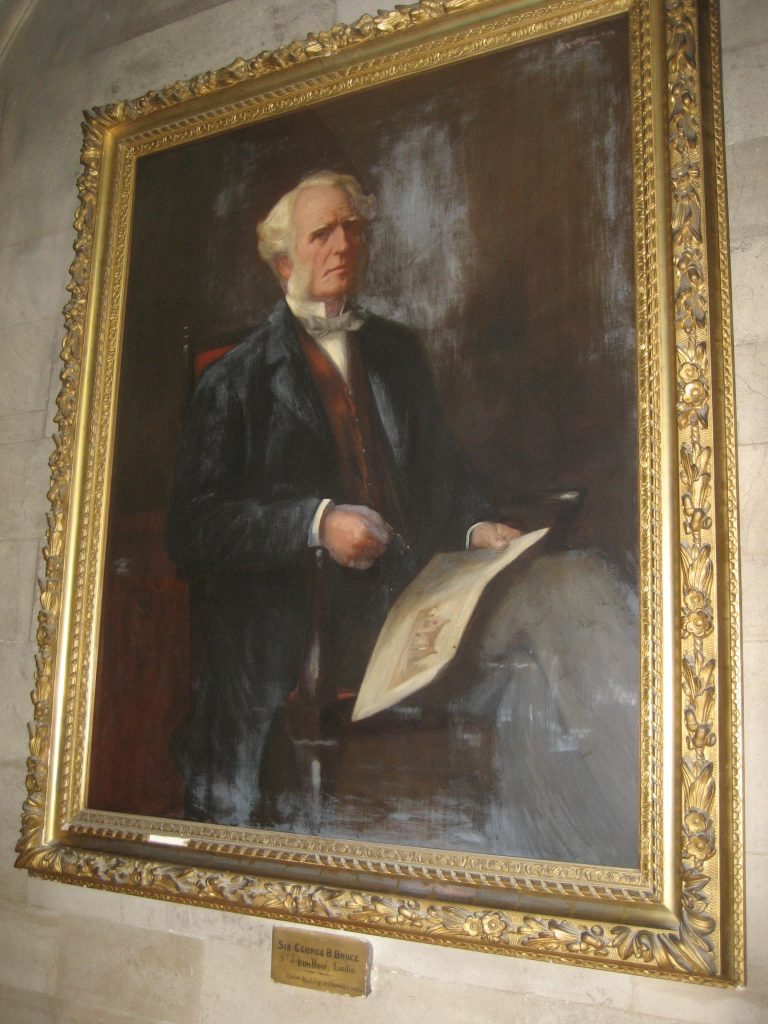
George Barclay Bruce was born in Newcastle upon Tyne in 1821, the son of a local engineer and millwright, and grew up in the thick of the early railway boom. After an apprenticeship on northern lines, he was taken on by Robert Stephenson and, at just 24, made resident engineer for the Royal Border Bridge at Berwick‑upon‑Tweed – a 28‑arch masonry viaduct over the River Tweed that became one of the showpieces of Victorian rail engineering – the featured image of this post.
Bruce’s real career, though, played out thousands of miles away. In 1851 he went to India, becoming one of the pioneers of railway construction on the subcontinent. He worked first on the Calcutta section of the East Indian Railway, then as chief engineer of the Madras Railway, where he laid out and partly built around 500 miles of line and drove costs down to roughly £6,000 per mile – low even by the standards of the day.
What stands out in Bruce’s Indian work is not just the miles of track but how he chose to deliver them. At a time when public works in India often relied on forced labour, he deliberately rejected that model and instead attracted local workers as free, paid labourers. He also developed and documented practical techniques for difficult ground conditions, such as founding bridges in sandy riverbeds using brick wells sunk by native divers, described in his paper on the Poiney Viaduct to the Institution of Civil Engineers (ICE) in 1857.
After illness forced him home in 1856, Bruce built a successful London consultancy and remained closely tied to Indian railways as a consulting engineer for systems including the South Indian Railway, the Great Indian Peninsula Railway and the Indian Midland Railway for decades. By the late 19th century he was a globally recognised railway expert whose advice shaped thousands of miles of track overseas.
Bruce reached the top of his profession when he became President of the Institution of Civil Engineers in the late 1880s. On 8 November 1887, in the middle of the coal‑fired steam age, he delivered a presidential address that now reads like a manifesto for renewable power and storage.
He began by noting how electricity had already become “light, heat, and power,” illuminating streets and beacons and carrying messages “around the world, across the desert, and beneath the ocean.” Then he looked forward to a time when engineers would learn how to store energy from wind, streams and tides efficiently and profitably, at “trifling cost,” turning electricity into a factor in the world’s life “compared with which the present is as nothing.”
Modern commentators at Warksburn Old Church – a Northumberland church he funded in 1875 – have picked up on this passage, pointing out that Bruce effectively anticipated the core architecture of today’s net‑zero systems: variable renewables backed by storage and smart control. He was, as they put it, arguably the first engineer to clearly articulate the idea of renewable generation plus storage more than a century before it went mainstream.
Bruce was knighted and left behind an impressive physical legacy: landmark bridges like the Royal Border Bridge and extensive sections of rail infrastructure in India and elsewhere. But his intellectual legacy may be even more striking – a Victorian engineer who understood that the future of power lay in learning to work with, and store, the “forces of nature” rather than simply burning more fuel.
In 1875 he paid to build a small rural church in Northumberland; in 2025 that same building was refurbished as a smart, low‑carbon house powered and heated by modern renewable and storage technologies. It is a neat full‑circle moment: a 19th‑century engineer’s money built the shell, and his 1887 vision now quietly lives on in the way the building is powered.
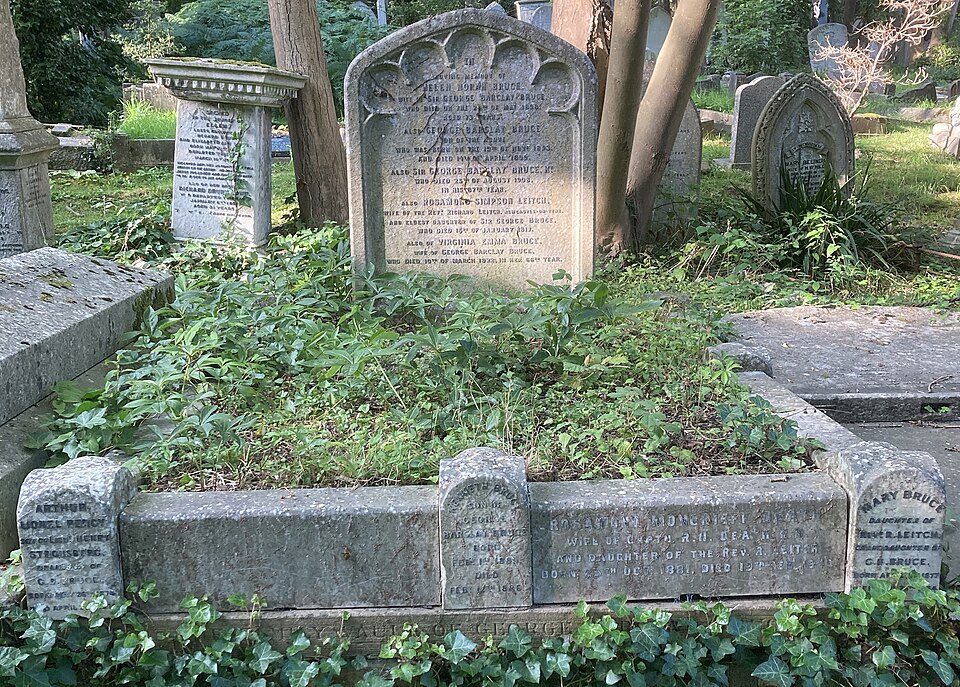
Sir George married Helen Norah Simpson in 1847 (sources differ on 1847 vs 1849), and they had one son and four daughters; memorials to Helen and their daughter Annie Louisa still stand in the church he paid to build at Wark. Bruce died peacefully at his home, 64 Boundary Road, St John’s Wood, London, on 25 August 1908, aged 87, and is buried in a family vault on the eastern side of Highgate Cemetery, almost opposite the grave of Karl Marx