Address
Blyth, Northumberland
U.K. NE24 2QW
Telephone
+44(0)1670 336766
Opening Hours
Monday to Friday: 08:00 - 17:30

Address
Blyth, Northumberland
U.K. NE24 2QW
Telephone
+44(0)1670 336766
Opening Hours
Monday to Friday: 08:00 - 17:30
Insights & Analysis
Diesel reduction on construction sites is moving from a sustainability goal to a programme risk management issue, driven by fuel security, downtime, maintenance burden and long-term energy resilience.
Diesel reduction construction sites strategy is no longer just a sustainability target. For contractors, plant fleets and infrastructure teams, it is becoming a programme risk management issue — driven by fuel price volatility, supply resilience, downtime exposure and the maintenance burden of diesel-first site energy.
For years, diesel was construction’s “safe” option: known quantities, easy hire, easy refuelling, and nobody has to change their workflow.
That logic is breaking — not because the industry suddenly found religion, but because diesel is increasingly a programme risk. When you zoom out, the problem is not just emissions. It is exposure: fuel price volatility, supply reliability, downtime, and the maintenance burden that comes with diesel-first site energy.
Two recent pieces capture the direction of travel:
That “strategic reinvention” phrase matters because risk is rarely reduced by a single shiny technology. Risk is reduced by system design, early planning, and measurable performance.
What we are seeing in the market is an overdue epiphany: batteries, hybrids and hydrogen are not winning purely because they are cleaner.
They are winning because they can be the more commercially savvy route when you factor in:
Prolectric’s reported case studies help because they move the conversation out of values and into operations: diesel saved, emissions reduced and costs avoided on real projects.
Intertraffic makes a complementary point: the biggest unlock is often planning early with the supply chain, so renewable alternatives can be specified before diesel becomes the default by habit.
The fact that these technologies are cleaner and greener matters, but for many construction decisions it is increasingly becoming the secondary benefit.
The stronger argument is commercial:
That is why the conversation is changing. “Green” might open the door, but risk reduction and predictable operating cost are what keep people in the room.
This is no longer just “a few progressive sites”. Major programmes are baking diesel reduction into delivery strategy — which is exactly what you would expect if the driver is risk management.
Lower Thames Crossing has publicly stated an intention to remove diesel from its construction sites by 2027, accelerating the use of electric vehicles and plant, while using hydrogen for heavy construction machinery.
HS2 published a Diesel‑Free Plan aiming to end diesel on all HS2 construction sites by 2029, covering machinery, power generation and welfare within site boundaries. The plan also references setting diesel-free requirements for Phase 2a and Phase 2b works as part of that programme approach.
Read those commitments as what they really are: not virtue signalling, but an attempt to reduce operational and commercial exposure over multi-year programmes where fuel volatility, downtime and energy uncertainty are expensive.
Where hydrogen fits best is not in the abstract “future fuels” debate. It fits where it reduces operational risk.
Construction and agriculture already bring fuel to the machine. That means mobile hydrogen bowsers, yard refuelling and site-based supply can slot into existing workflows long before anyone needs a national road-fuel network.
That is why construction and agriculture are such natural early adopters for hydrogen. They already understand fuel logistics. The question is not whether a hydrogen bowser can replace a diesel bowser in principle. The question is whether the machine, duty cycle and commercial case line up.
Further reading: Why construction and agriculture will be the real hydrogen pioneers .
We had this moment as a company around eight months ago.
Leading with “green and sustainable” was winning us few friends. Leading with a hard commercial argument did.
Cleaner is good. Predictable is what gets decisions signed off.
A lot of the industry is still iterating around the diesel powertrain.
We are not.
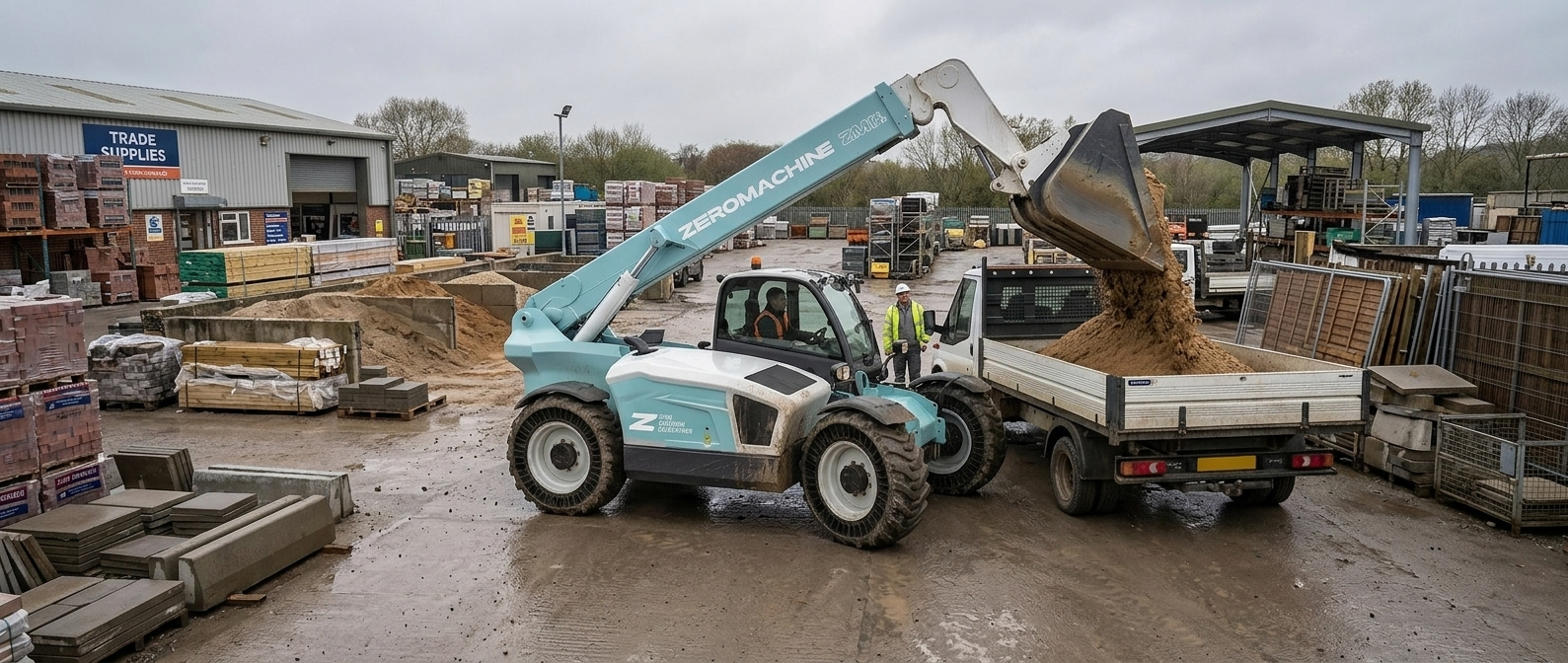
Our telehandler concept is built around a hydrogen fuel-cell hybrid electric architecture targeting diesel-like workflow, including fast refuelling. But the bigger generational jump is this:
We are stepping away from “big hydraulics” and into electric and electro-hydraulic actuation because the enabling technology is now there.
That matters for the next decade because traditional hydraulic systems carry a long tail of pain: leaks, hoses, contamination, heat, servicing overhead and the knock-on downtime costs that operators and fleet managers know far too well.
Our approach is lifecycle-first: simplify the machine, reduce maintenance burden, design for serviceability, and build something that can take real site abuse without being precious.
Further reading: Why we’re moving from big hydraulics to electric and electro-hydraulic actuators .
If you are trying to reduce diesel exposure on a project or fleet, the boring checklist is the correct one:
A proper diesel reduction construction sites strategy should start with risk mapping: where fuel is used, where downtime hurts, and where cleaner power or electrified plant can remove exposure rather than simply move cost around.
That is how “sustainable construction” quietly becomes a commercial advantage.
To unlock serious investment you need credible customer interaction. To win customer confidence you need a credible build programme.
Yes, it is a chicken and egg problem.
So we are doing both.
If you run telehandlers, manage plant, maintain machines, or deliver projects where diesel exposure is becoming painful, we want your input on duty cycles, service pain points and workflow constraints.
The first demonstrators need to be built around reality, not theory.
If you invest in industrial innovation where the commercial case comes first, we are raising seed investment to bring the Zeromachine programme to demonstrator stage.
The opportunity is not just “green plant”. It is construction machinery designed from first principles around lower total cost of ownership, reduced maintenance burden and future site-energy realities.
