Address
Blyth, Northumberland
U.K. NE24 2QW
Telephone
+44(0)1670 336766
Opening Hours
Monday to Friday: 08:00 - 17:30

Address
Blyth, Northumberland
U.K. NE24 2QW
Telephone
+44(0)1670 336766
Opening Hours
Monday to Friday: 08:00 - 17:30
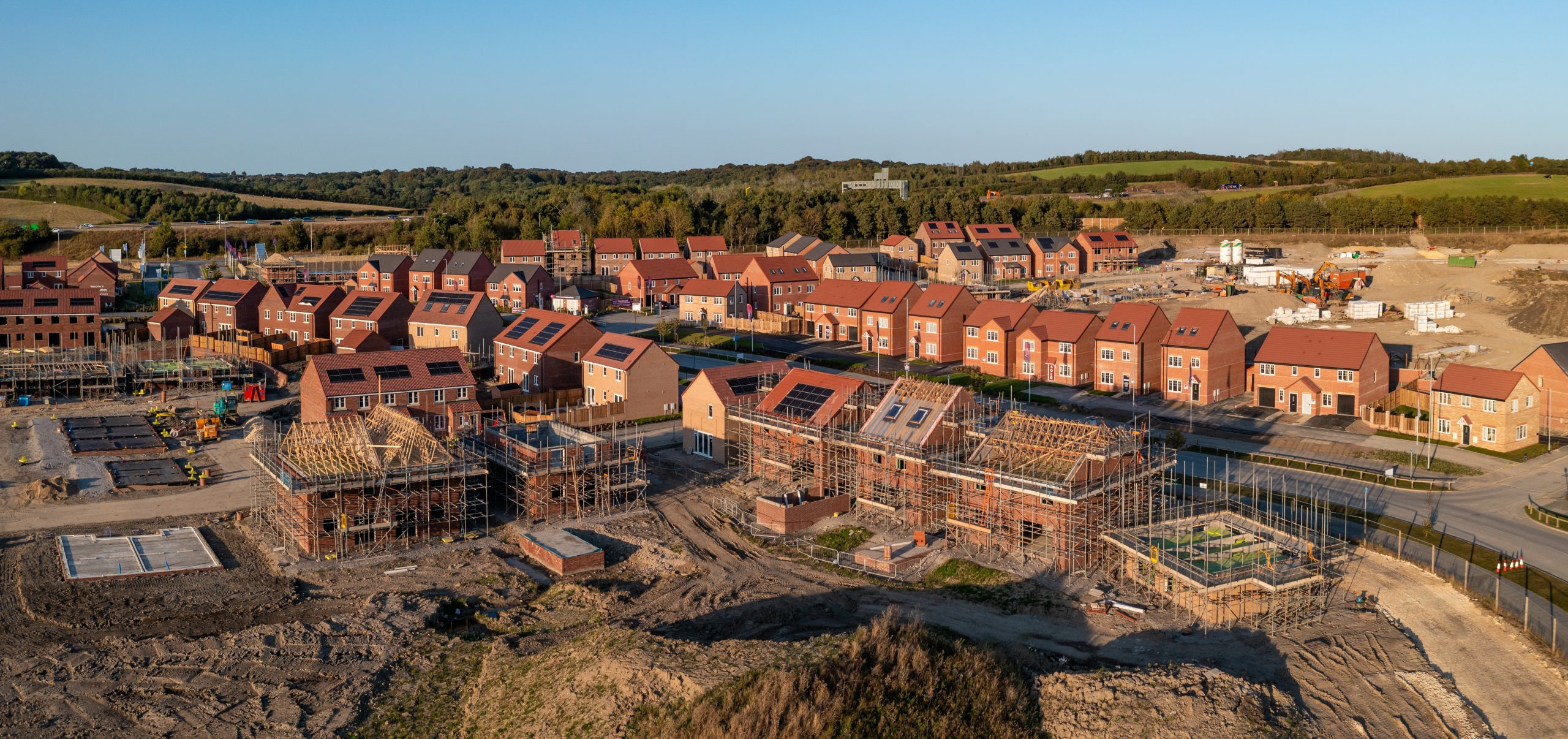
Modelling a 100‑home development shows how a hydrogen fuel‑cell site can finish 20% faster, cut total project cost by around £668k, and eliminate on‑site CO₂ from plant.
In January this year (2025) the UK Government[1] published the results of a December ‘23 call for evidence[2] about Decarbonisation options for Non-Road Mobile Machinery (NRMM). To help inform the policy development.
The call for evidence sought to gather industry and stakeholder views on NRMM decarbonisation. One of the key highlights from the responses was this snippet.
“…. sought evidence on the opportunities and barriers to the development, deployment, and utilisation of the decarbonisation options ….”
It was reported (by respondents) that low and zero carbon NRMM can cost significantly more to purchase and operate than incumbent technologies, caused by higher input costs and the price of alternative fuels. The cost of installing recharging infrastructure was also raised as a barrier.”
I’ve been pondering this a lot, particularly with regard to reducing the total cost of ownership (TCOO) of zero-emission machinery. I for one will readily admit that the initial purchase of zero-emission machinery does cost significantly more than current incumbent diesel internal combustion engine machinery, however I do believe that this initial premium can be offset totally by cutting the TCOO of the equipment and that happens at the design & development stage and allowing for extended operations in sensitive areas.
To that end I wondered what the future could potentially look like in 7 years’ time (2032) and with the help of Ai (Perplexity) came out with some interesting figures.
If you take the supposition is that zero emission construction machinery utilising hydrogen fuel cell hybrid energy systems as it’s quiet in comparison to diesel or hydrogen internal combustion engine machines would allow construction companies to extend their site working hours slightly (obviously earthmoving operations, drilling, sawing, hammering etc. will create noise so full 24hr operation isn’t possible) but let’s say that it’s possible to extend construction operations from a 10 hour work day envelope to a 12 hour envelope (allowing 1 hr for lunch & breaks) – so rather than working from 08:00 to 18:00 they could work from 07:00 to 19:00. You run staggered “shifts” – one starting at 07:00 and finishing at 16:00 and one starting at 10:00 finishing at 19:00 to maintain productivity the size of the workforce is increased by 25% to maintain overlap with no overtime premium.
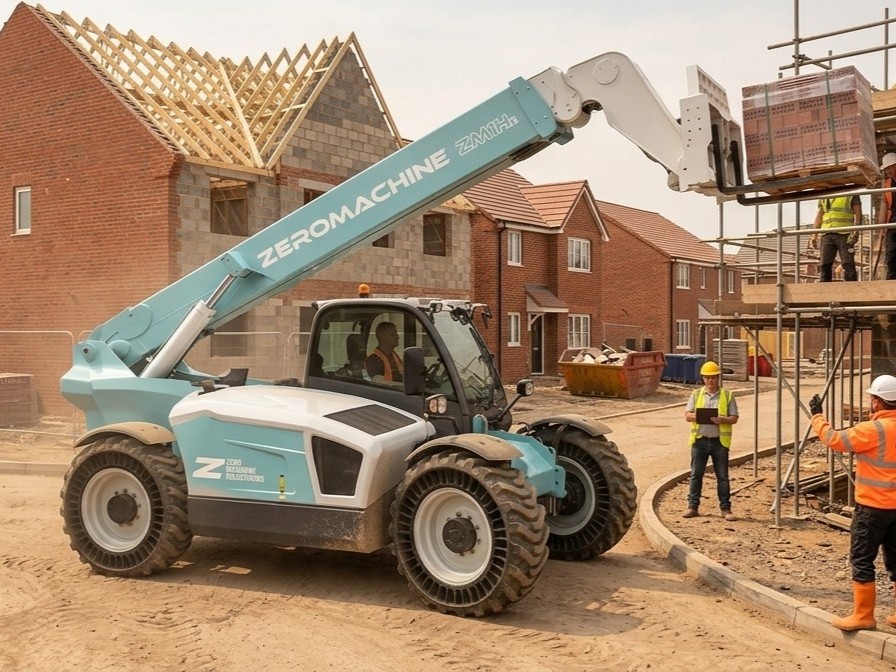
If the constructor was building a housing development of 100 family homes in North East England, how much quicker would this project be completed and would there be a cost saving for the constructor?
So modelling the total project costs for a 100-home development comparing a zero-emission hydrogen site (i.e. Hydrogen Fuel Cell Hybrid machinery – i.e. quiet) versus a conventional diesel site. We’ll assume:
Efficiency and Calorific Value Adjustments
Cost Model
| Cost Element | Diesel Site | H₂ Site |
| Plant/Equipment Hire | £832,000 | £688,800 |
| Generator Hire | £36,400 | £57,400 |
| Fuel (Plant & Gen) | £166,400 | £77,974 |
| Site Facilities | £36,400 | £28,700 |
| Noise Mitigation | £10,000 | £0 |
| Labour (site management, prelims) | £2,080,000 | £1,640,000 |
| Core build, infrastructure build, fees, etc. | £12,300,000 | £12,300,000 |
| Total | £15,461,200 | £14,792,874 |
Emissions Calculation
Summary Table: Full Project (100 Homes, Greenfield Site, Efficiency-Adjusted)
| Item | Diesel | Hydrogen |
| Total Project Cost | £15,461,200 | £14,792,874 |
| Total Programme | 24 months | 19 months |
| On-site CO₂ Emissions | ~279 tonnes | 0 (green H₂) |
| Health/Disruption | High (NOx, PM, noise) | Low (clean air, quiet) |
By accounting for the 50% efficiency of hydrogen fuel cell machines (vs. 35% for diesel) and hydrogen’s higher calorific value, a 100-home greenfield estate project using green hydrogen at an amortised £4.55/kg and a 5% plant hire premium would cost about £668,000 less than a diesel-powered equivalent (about 4.3% cheaper), finish 20% faster, and eliminate nearly 279 tonnes of on-site CO₂ emissions.
This makes hydrogen a clear economic, environmental, and community health winner as prices fall and technology matures.
Excluding the core build material costs and focusing solely on labour and site overheads, switching to hydrogen-powered plant (with a 5% hire premium, £4.55/kg green H₂, and efficiency adjustment) delivers a cost saving of approximately 21% over diesel for the infrastructure phase of a 100-home greenfield estate.
Ahhh I hear you say that’s for a development in North East England, what about London & the South East? Truthfully there isn’t a great deal of difference in the bottom line, however the core costs are a LOT more expensive.
The percentage saving on the infrastructure phase is unchanged from other regions, but the absolute value is higher due to higher baseline costs.
Taken together, the modelling indicates that a 100‑home greenfield estate built with hydrogen fuel cell hybrid plant can:
As hydrogen pricing falls and equipment matures, zero‑emission plant stops being a “green premium” and becomes a strategic lever on programme, cost and risk. For contractors, developers and clients who are serious about net‑zero, community impact and predictable delivery, these numbers show that quiet hydrogen machinery is not just environmentally credible – it is commercially rational.
If you’d like to explore what a hydrogen‑enabled, extended‑hours site could look like for your next project – or pressure‑test the assumptions for a specific development – Zeromachine Works Studio can build a tailored model around your real‑world constraints, supply options and fleet strategy.
This was perplexity.ai’s answer
The 100-home greenfield estate was based on typical UK housing development scales. Industry data shows that housing developments of 50-100 homes typically take 18 months to 3 years from planning to completion. I used 24 months (104 weeks) as the baseline for diesel construction, which aligns with standard delivery timeframes.
The 19-month (82 weeks) hydrogen timeline represents a 20% reduction achieved through extended working hours enabled by quieter hydrogen equipment. This assumption was based on the premise that hydrogen fuel cell equipment operates significantly more quietly than diesel, potentially allowing extended site hours from 7am-7pm instead of 8am-6pm.
The core house construction cost of £25 million for 100 homes was derived from current UK building costs:
Infrastructure costs were set at 15% of build cost (£3.75 million), which aligns with industry standards for site infrastructure including roads, utilities, landscaping, and drainage systems.
The £8,000 per week diesel plant hire cost was derived from aggregating typical UK construction equipment rental rates:
For a 100-home site requiring multiple pieces of equipment simultaneously, £8,000/week represents a realistic aggregate cost.
The hydrogen plant hire premiums tested (5%, 15%, and 50%) reflect different market maturity scenarios:
The 1,000 litres per week diesel consumption was based on:
The hydrogen consumption calculation required energy equivalence analysis:
Diesel Energy Input:
Hydrogen Requirement:
This efficiency advantage is supported by research showing hydrogen fuel cells achieve 50-60% efficiency compared to diesel engines at 35-40%
GeoPura’s £44.27/kg current (18/06/25) spot price was sourced directly from their published pricing. This represents current market pricing for green hydrogen meeting UK Low Carbon Hydrogen Standard (LCHS) certification.
The £6.50/kg consensus price represents typical industry projections for near-term green hydrogen costs, reflecting current contract pricing and medium-term market expectations.
The £4.55/kg amortized price reflects a 60% cost reduction trajectory from 2025-2035:
This reduction trajectory aligns with government targets and industry roadmaps for green hydrogen cost reductions.
The £20,000 per week labour cost was based on:
£350/week covers site offices, welfare facilities, security, and utilities based on standard industry rates.
CO2 Emissions
Diesel CO2 emissions were calculated using the standard conversion factor:
However, for the 19-month hydrogen scenario:
Summary of Key Cost Components
| Cost Element | Diesel | Hydrogen |
| Plant Hire | £824,000 | £688,800 |
| Generator Hire | £36,050 | £57,400 |
| Fuel | £164,800 | £77,863 |
| Site Facilities | £36,050 | £28,700 |
| Noise Mitigation | £10,000 | £0 |
| Labour | £2,060,000 | £1,640,000 |
| Subtotal | £3,130,900 | £2,492,763 |
| Core Build & Infrastructure | £12,300,000 | £12,300,000 |
| Total Project | £15,430,900 | £14,792,763 |
The calculations align with established industry benchmarks:
All assumptions were conservative and based on publicly available industry data, government statistics, and established engineering principles for energy conversion and efficiency calculations.
[1] Department for Energy Security & Net Zero (DESNZ), the Department for Environment Food & Rural Affairs (DEFRA), and the Department for Transport (DfT)
[2] Non-Road Mobile Machinery Decarbonisation Options: Call for Evidence: Summary of Responses
