Address
Blyth, Northumberland
U.K. NE24 2QW
Telephone
+44(0)1670 336766
Opening Hours
Monday to Friday: 08:00 - 17:30

Address
Blyth, Northumberland
U.K. NE24 2QW
Telephone
+44(0)1670 336766
Opening Hours
Monday to Friday: 08:00 - 17:30
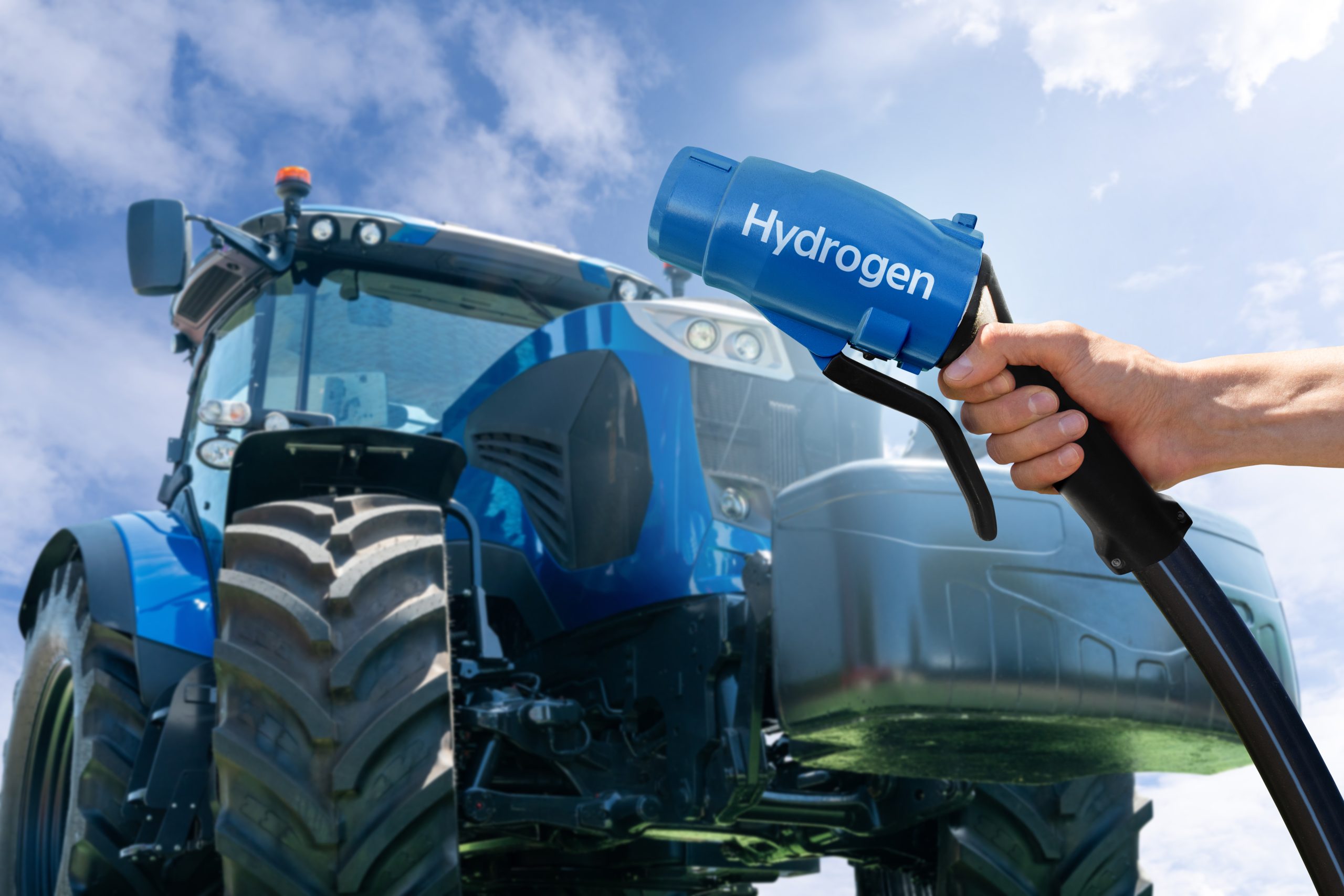
Construction and agriculture are natural early adopters for hydrogen: they already bring fuel to the machine, so mobile hydrogen bowsers and yard refuelling can slot into existing site logistics long before there’s a national road‑fuel network.
Hydrogen construction and agriculture applications may be among the first sectors where hydrogen makes practical sense in real machine use. On most building sites and farms, heavy kit doesn’t go to a forecourt – fuel comes to the machine. Excavators, dumpers and telehandlers are bunkered from bowsers; tractors and combines are refuelled in the yard or in‑field. That operating model maps almost perfectly onto hydrogen, where mobile or semi‑fixed refuelling units can be delivered to site and used much like today’s diesel bowsers.
Manufacturers are already proving this. JCB’s mobile hydrogen refuelling units and other transportable hydrogen stations store gas in high‑pressure cylinders, are dropped onto site, and refill machines via a nozzle in minutes – broadly comparable with diesel in refuelling time. New platforms such as HyTANKa take the same idea further, acting as road‑legal hydrogen bowsers that can refuel multiple machines per day on dispersed or hard‑to‑access jobs. In agriculture, containerised systems co‑developed with OEMs are being trialled to make farm hydrogen “as easy as diesel” for hydrogen ICE tractors and telehandlers.
Because fuel is already planned as a site operation – with storage areas, bowser runs, and procedures – upgrading that logistics chain to hydrogen is an evolution, not a reinvention. The same foremen and fuel contractors who manage diesel today can, with training and the right kit, manage hydrogen deliveries and on‑site storage tomorrow.
Hydrogen refuelling for off‑highway kit looks different from a public road station, but the principle is simple: storage + compression + controlled dispensing. A typical construction or ag setup uses:
Units can be:
Crucially, several modern systems are designed to be electrically self‑sufficient, using onboard hydrogen engines or fuel cells plus batteries to power compressors and controls. That means they do not rely on a grid connection – exactly what’s needed on early‑phase greenfield sites, remote infrastructure projects, or farms with limited electrical capacity.
Refuelling times are measured in minutes rather than hours, and current demonstrators have shown the ability to refuel the same machine multiple times before the unit itself needs recharging from a higher‑capacity source. For site managers, that keeps the refuelling pattern very close to existing diesel practice: plan deliveries, bunker locally, refuel during natural pauses in work.
Hydrogen as a road fuel for cars and light vans is facing a very different problem. To be useful for general motoring you need a dense public network of filling stations across whole regions and countries. In the UK there are still only a handful of public hydrogen refuelling points, with some recent closures and almost no new stations opening in several years.
That creates a classic chicken‑and‑egg trap: drivers will not buy hydrogen cars without reliable stations, and investors will not build stations without vehicles using them. Each public station also has to deal with land, planning, high‑capacity power or delivery logistics, and safety case work for an unknown flow of customers. The result is exactly what fleets are now reporting – range and routing are dictated by station availability, undermining hydrogen’s theoretical advantages for light road transport.
Construction and agriculture do not have that problem. They operate in defined places for defined periods, with known equipment lists and predictable fuel demand. A hydrogen solution only has to work for that specific estate: this quarry, that road project, these three farms. Hydrogen supply can come in by tube trailer, local pipeline, or on‑site electrolysis if the business case supports it, without needing a national filling‑station grid.
In other words, road hydrogen has an infrastructure problem; off‑highway hydrogen has an engineering and logistics problem – and engineering and logistics are exactly what contractors and farmers handle every day.
When the context is right, hydrogen solves several headaches that are hard to address with diesel or pure battery solutions alone:
These advantages line up directly with regulatory and client pressure to cut NRMM emissions and reduce diesel on sites – as reflected in the UK’s zero‑diesel route maps and NRMM decarbonisation work. For operators who already manage fuel deliveries, bowsers, bunds and spill response, the question becomes when to start introducing hydrogen into that system, not whether it can be made to work at all.
For construction and agriculture, hydrogen does not need a revolution in user behaviour. It needs:
That is exactly the space where early movers are now experimenting – from trial fleets of hydrogen excavators on major infrastructure projects to farm pilots using containerised hydrogen systems. As those pilots harden into routine operations, it is likely that construction and agriculture will show how hydrogen really works at scale long before there is a hydrogen pump on every motorway junction.
