Address
Blyth, Northumberland
U.K. NE24 2QW
Telephone
+44(0)1670 336766
Opening Hours
Monday to Friday: 08:00 - 17:30

Address
Blyth, Northumberland
U.K. NE24 2QW
Telephone
+44(0)1670 336766
Opening Hours
Monday to Friday: 08:00 - 17:30
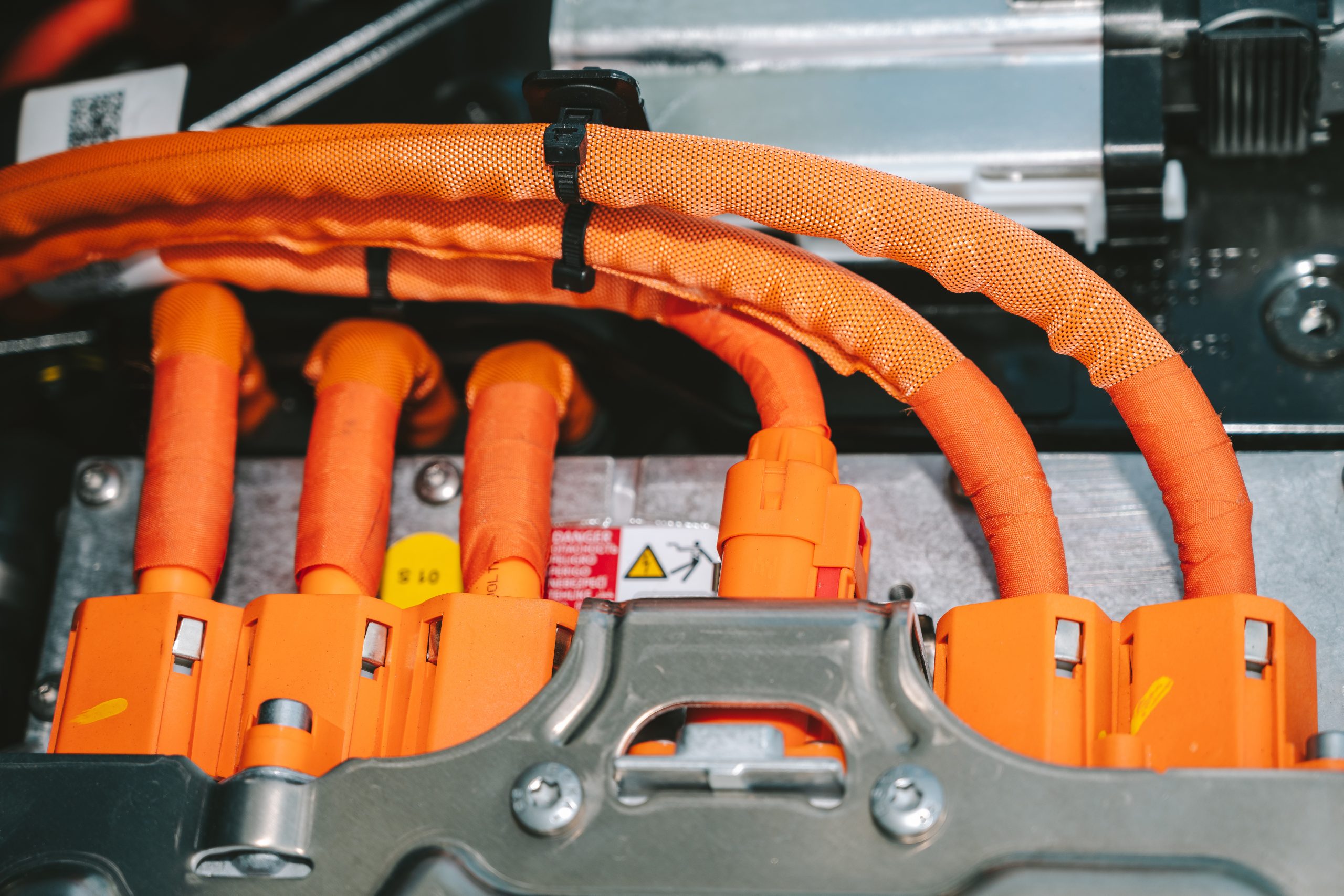
On modern 800 V fuel‑cell hybrids, safety is about more than orange cables. This post explains how HVIL, service disconnects and controlled capacitor discharge keep people safe around high‑energy HV systems.
Modern battery‑electric and fuel‑cell vehicles machinery routinely run at 600–800 V DC and above to keep currents sensible and losses down. That voltage level is great for efficiency and cable sizing, but unforgiving if someone makes a mistake with covers, connectors or procedures. Good high‑voltage (HV) design is not just about orange cables and warning stickers; it is about making sure the system fails safe by default and that technicians are forced into safe habits by the way the machine is built.
A lot of the thinking here comes from automotive EV practice – particularly the use of High Voltage Interlock Loops (HVIL), structured shutdown sequences and clear physical service disconnects – adapted for off‑highway and construction duty. A high voltage interlock loop is one of the simplest ways to make a 800 V system safer to service and harder to get wrong.
At its core, an HVIL is a low‑voltage loop that passes through every critical high‑voltage connector, cover and device in the system.
On connection, the sequence is deliberately staged:
On disconnection that process reverses. The contactors open and the bus is de‑energised before anyone can fully withdraw a live connector and create an arc.
Done properly, HVIL is not an “optional extra”; it is the nervous system that makes it extremely hard to have exposed live 800 V anywhere on the machine while a human is working on it.
HVIL handles unexpected opening of the HV system. For planned work, you still need a clear sequence to make the machine electrically safe:
Good off‑highway design puts those service disconnects where they are accessible but still protected, and makes it obvious from the hardware when the machine is “opened up”. In many cases, interlocking panel switches, pack lids and disconnects into the HVIL loop gives an extra layer of protection: if someone removes a cover without following procedure, the loop opens and the system drops out.
On a fuel‑cell hybrid platform there is an additional wrinkle: the fuel cell and DC‑link capacitor bank can both act as energy sources into the HV bus. The shutdown sequence has to deal with more than just isolating a battery pack. In our case, the architecture includes a sizeable ultracapacitor bank on the 800 V bus for peak shaving and “active catch” functions. That bank can source very high currents for short periods, which is exactly what you want for machine dynamics – and exactly what you do not want available to a person opening a cover.
That is why the service‑safe state is defined not just as “contactors open” but as “pack isolated, fuel cell output disabled and capacitor bank actively discharged into a defined dump path”. Only once bus voltage has fallen below a verified threshold and the discharge path is open‑circuit again do we consider the system electrically safe to touch, and that condition is enforced in hardware as well as software.

Beyond HVIL and service plugs, a few simple design habits make a disproportionate difference on 600–800 V machinery:
On the control side, tying HVIL and contactor logic back into recognised functional‑safety approaches (for example, treating “HV bus de‑energised” as a safety function in an ISO 13849 context) helps ensure the design meets a quantifiable target for the probability of dangerous failure over the machine’s life.
At 800V, there is no such thing as a “small” mistake. The upside is that the tools to manage the risk – HVIL, service disconnects, interlocks, clear sequences and good training – are well understood from the automotive world and translate cleanly into construction and off‑highway machinery.
Getting this right does three things at once:
High‑voltage safety on a fuel‑cell hybrid is therefore about managing three things at once: stored energy in the battery, continuous power from the fuel cell, and transient energy in the DC‑link and ultracapacitor bank. The HVIL and service‑disconnect strategy is designed so that, in any fault or emergency state, all three are driven rapidly towards a known, low‑energy condition without relying on a single controller or software path to get it right.
